

Archives - Page 2
-
Vol. 4 No. 2 (2013)
The first words are not necessarily the most important. Still, it is up to them to dictate the continuity and rhythm of reading. Here we have the privilege to invite you to read more this issue of Inquietude journal, fruit of a seriousness inherent in the universe of academic research combined with the effervescence of young researchers in the field of philosophy. Commitment that generates, of course, the most satisfactory results. We recall that, recently, we obtained the qualification Qualis B5 - which gives more importance and notoriety to the journal - this fosters the interest with which philosophy students from various parts of the country seek us.
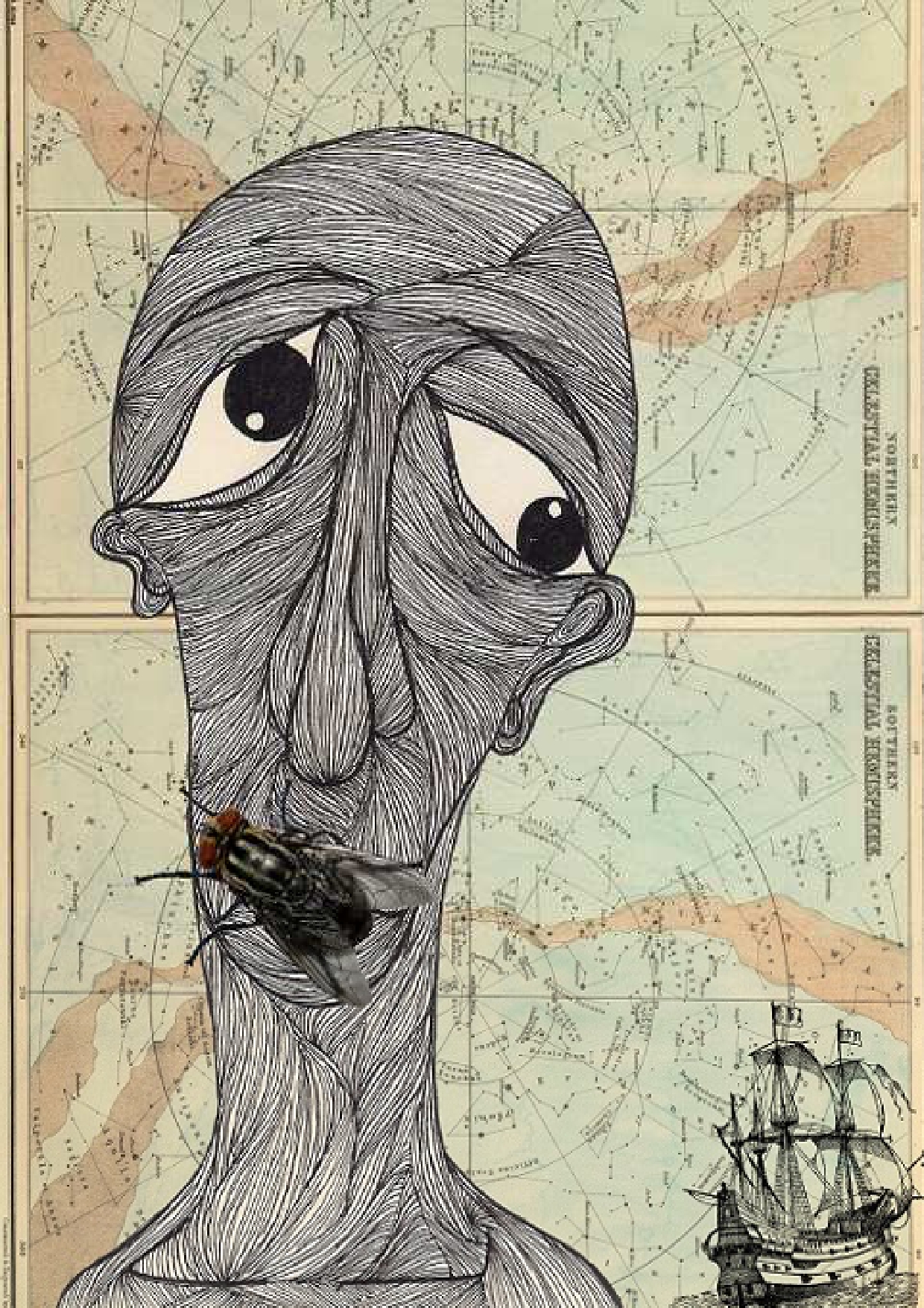
In this edition we have eight articles, a section dedicated to the Philosophy Week, two interviews [respectively by Willian Bento Barbosa and Nádia Junqueira Ribeiro] with important researchers in Hannah Arendt - Adriano Correia and Yara Frateschi - besides the part dedicated to the dissemination of abstracts of monographs and dissertations of students who completed their bachelor’s degree and master’s degree in philosophy at the Federal University of Goiás (UFG). On the cover we have a creation by Andréia Ferreira - graduated in philosophy - representing the disform. A contradiction in principle, because the texts must fit into a series of formal requirements for their submission and subsequent dissemination. However, there is no formality that prevents the disform to emerge as a restlessness in the very content of what is written. Not rarely, disform is what we find as philosophical thought, if compared to the world around us. But what other option would we have from a context taken by passivity in which the perverse of the real is less strange than a deformity of thought?
In the initial article The anthropological genesis of religion in Ludwig Feuerbach [by Felipe Assunção Martins] we have a theoretical reconstruction of the human origin of God, as well as a critique about religious alienation. The article helps us to think about how the anthropological truth of God and religion, according to Feuerbach, has as its principle a theory of human consciousness and essence. The philosopher understands man as being conscious of his kind.
In The relation between feelings and the study of morality [by Ana Gabriela Colantoni] the reader will encounter different philosophical perspectives about the notion of pleasure, and how the actions that provide pleasure relate to moral issues in the works of Aristotle, Kant and Mill. Next, the contribution of the German philosophers Hegel and Nietzsche to the establishment of a Christian ethos, and the characteristics that lead the Hegelian philosophy to a philosophy of fullness, is the subject of the following article [by Adilson Felicio Feiler], entitled The Christian ethos in Hegel and Nietzsche from the concepts of "fate" and "love".On the arts of government of captive spirit: Meeting points between Nietzsche and Foucault [by Walquiria Pereira Batista] We have a study that points to a possible approximation of Friedrich Nietzsche's and Michel Foucault's thought regarding the constitution of the modern state and a new subject. While Foucault analyzes the emergence of the arts of government having as bias the construction of modern subjectivity, Nietzsche thinks the concept of captive spirit in which the individual, in search of a supposed peace, would be forged by modernity.
Although the ontology of Paul Ricouer keeps human action as a center, there is an attempt to keep it plural, in regard to the most diverse ways of saying the self. The speculative character of his ontology, as well as the direction of understanding oneself's maintenance from the relation with otherness is present in the article The ontology of acting by Paul Ricoeur: Alterity and plurality [by Sabrina Ruggeri]. A phenomenology of existence: On Cézanne's doubt by Maurice Merleau-Ponty [by Luana Lopes Xavier] aims to analyze the proposal of Cézanne’s painting, as well as the existence-art relation present in his work in the light of Merleau-Ponty’s thought.
The historical moment of revitalization of American pragmatism and the consequences of this movement added to the linguistic instrumental of post-analytic philosophy is treated in The revitalization of American pragmatism in the 1970s: Richard Rorty’s pragmatic-linguistic turn [by Flávio Oliveira]. Finally, we have the last article of this section entitled On the permanence of exception: The case of the state of Goiás [by Pedro Penhavel]. In this article the author appropriates concepts of political philosophy by Walter Benjamin and Giorgio Agamben and sociologists analysis such as Francisco de Oliveira and Loïc Wacquant to address the issue of suppression of fundamental rights and the escalation of police violence in Goiás during the post-military-dictatorship period.
In the space for the Philosophy Week we have the article Art and politics in the thought of Jean-François Lyotard [by Rafael Silva Gargano]. In the present text, Inquietude readers will be led to understand the roots of the aesthetic discussions present in Lyotard’s philosophy, as well as its discomfort relevant to the Marxist theory of his time. Such discomfort, it should be said, is fundamental for the understanding of the relation the philosopher establishes between art and politics, evidenced in the essay Notes on the critical function of the work of art, published in 1970. In The theory of will to power as a character of existence [by Eder David de Freitas Melo] we can observe that, in the Nietzschean conception that deals with the world, and everything that is in it, will to power is all there is. Within this perspective, the article brings us an analysis of some aspects of this theory of will to power, thus contributing to understand how the German philosopher - Friedrich Nietzsche - uses the same conceptual arrangement to qualify all existence.
We hope the reading so far has motivated our readers to continue through the texts here. We still take the opportunity to thank all the people who submitted texts for evaluation. To those who did not have the text published, we ask you to consider the feedback given through the reviews, so you can, at an appropriate time, send us again for possible circulation. To all professors in the Faculty of Philosophy and the Philosophy Course at Goiás City Campus our thanks for the incentive and for all collaboration destined to us. To the professors who provided us with external opinions, we would like to point out this number would not be possible without their rigorous work. To the editorial team - now joined by students Eder David de Freitas, Regis Lopes and Samarone Oliveira - for their constant involvement and dedication.
We could not fail to address the Group of Studies in Biopolitics of the Faculty of Philosophy of UFG that gives us space for the launch of this edition in the IV Colloquium of Biopolitics and, more than this, has collaborated to promote our journal encouraging the publication of texts presented in the colloquiums held by the Group, as is the case of the Dossier Biopolitics published in the edition (v. 3, n. 2) of 2012. We also reinforce the invitation to submit the papers presented in this colloquium for evaluation and publication in the next issue, to be released in July 2014.
Turning back again to the beautiful work that appears as this edition cover, we hope the expectation of restlessness can drive us as those who, not immediately formalizing with a world given to us, announce the disform contained in the questions that now bother us.
And finally, an insufficient thanks to a very special person, an artist, a creator not only of significant and disturbing artistic beauties: Pedro Labaig. Even after completing the Philosophy course at UFG, he continued to be responsible for the hard work of taking care of the final art and the diagramming of Inquietude. At a distance, in Paris, amid the painting of his beautiful paintings and his master’s degree in Philosophy, he remained among us as collaborator, participant, responsible, a gentleman, as he always proved himself. As a very small part of our gratitude, we will now try to walk with our own legs, to relieve Pedro from this task. However, by his greatness, hes has already been fixed in the memory of our journal.
The Editing
-
Vol. 4 No. 1 (2013)
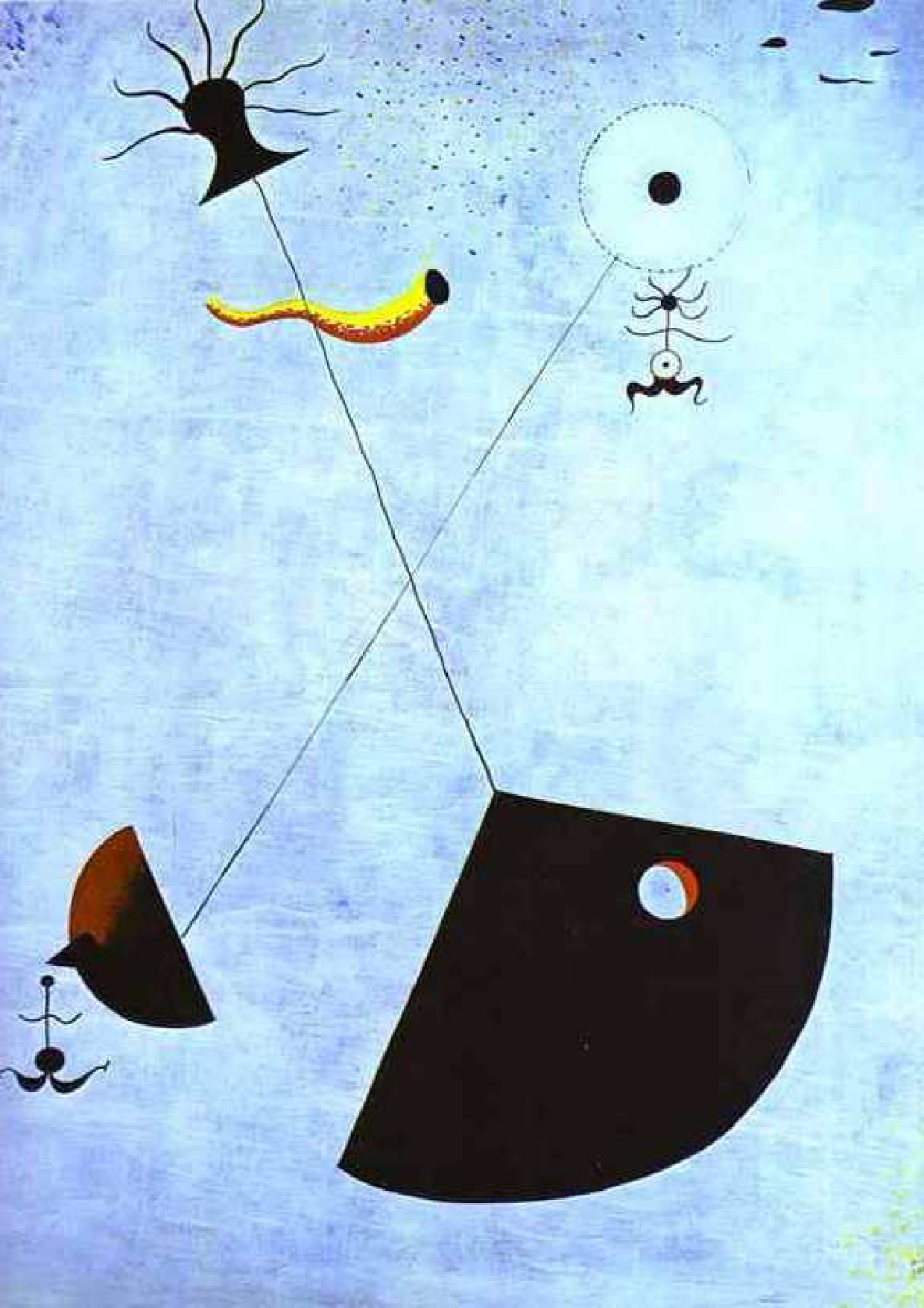
With joy and enthusiasm we give birth to the seventh edition of Inquietude. The painting by the Catalan surrealist (Miró), on the cover, illustrates motherhood. In this edition, the maternal figure we honor is our dearest Júlia Sebba Ramalho Morais, executive editor of the journal and lecturer in the Philosophy course of the campus in Goiás City (UFG). In a climate of fecundity and birth, Inquietude celebrates the opening of its fourth year of activity. The fecundity is shown in the restlessness of the students, researchers, professors and collaborators in general, who contributed and contribute to the journal to consolidate itself as a valuable and qualified means of communication of emerging philosophical efforts on the national scene. This issue contains eight articles, a review and an unpublished translation of The 1643 correspondence between Descartes and Elisabeth. The last section is dedicated to the publication of the last part of A heroic history of modernity: Comments on Josef Früchtl’s The impertinent self, fruit of the work coordinated by professor Carla Milani Damião (UFG) together with students from the Kinosophia Study Group.
The articles that make up the first section cover the plurality of perspectives found in the various lines of philosophical research. On The way to universalization: The search for social peace in Eric Weil, the author [Daniel Artur Emidio Branco] presents us with the discussions of this French philosopher (of German origin) from the beginning of the 20th century, still not well known in Brazil, addressing fundamental issues for the debates in moral philosophy and political philosophy: the problem of evil, violence, society, law.
Now with regard to the article Happiness according to Sêneca [by Daniel Carvalho da Silva], we have the still present advices and moral teachings of the Stoic philosopher to reach the so desired happiness. In The lightnings of fatality: Reflections on Nietzsche's and Shakespeare's tragic [by Eduardo Carli de Moraes] we have an example of the always expected and rich relationship between philosophy and literature with the analysis of two notable authors for the understanding of the tragic dimension of human life. With Spirit and consciousness in Hegel's The phenomenology of spirit [by Leonardo Araújo Oliveira] the reader is led to the Hegelian universe of subjectivity. The conceptual plot of the text passes through the successive stages of consciousness and the constitution of the spirit towards the Absolute.
Amid the ethical dilemmas arising before the inevitable advancement of science and technology, the question of building a new ethics based on the concept of responsibility emerges. On the horizon of this conception, the present edition brings the article The convergence of parental and political responsibilities in Hans Jonas' ethical theory [by Mayra Rafaela Closs Bragotto Barros Peterlevitz], discussing the ethical value of responsibility in the face of parent-child relationships, and of the public man and their community. The link between private interest and violence is the central point of discussion in The homo oeconomicus and the state of exception. The author [Guilherme de Freitas Leal] draws an interesting parallel between the concept of Homo oeconomicus in Foucault and the idea of exception in Giorgio Agamben's philosophy.
When faced with Discipline, control and the new servitudes and subjections of capitalism [by Vladimir Moreira Lima Ribeiro] the relationship between capitalism and subjectivity in the present day is revealed. The consolidation of capitalism as a disciplinary society and its functioning through biopower is a theme worked with Michel Foucault as background. The mutation suffered by capitalism, which culminates in the consolidation of a control society, and its relationship with the processes of subjectivation, is discussed through the contributions of Gilles Deleuze. Still in the field of contemporary political philosophy, Thinking on hospitality: A reading from the philosophy of Jacques Derrida [by Pedro Fornaciari Grabois] presents a dialogue between Derrida and Emmanuel Levinas, where it reflects on the notions of and more, in connection with the philosophical question of otherness.
In this edition we also have a review of the book French philosophy, by François Cousset. The author [Vinicius Oliveira Sanfelice] initially narrates the unusual and ironic context in which the discussion on a homogeneous French philosophy arose. The result is an extensive and enriching contemporary philosophical debate in light of the concepts of deconstruction, use and context.
Still in the French setting, but under the philosophical atmosphere of the 17th century, the reader will have the opportunity to read first-hand the unpublished translation from English [by Marcelo Fischborn] part of the text of The correspondence between Descartes and Princess Elisabeth prepared by the respected interpreter Jonathan Bennett. The translation has significant didactic value for presenting the philosophical content of the correspondence.
Heading towards closure, we find the third part of the special publication coordinated by Professor Carla Milani Damião (UFG) together with students from the Kinosophia Study Group, entitled The hybrid Self, Nietzsche, Foucault, postmodernity and the science fiction film, that will deal with the rich and long relation existing, for example, between the concept of Übermensch in Nietzsche and the constitution of the hero in the genre of science fiction. This is the last part of the special series A heroic history of modernity: The impertinent self by Josef Früchtl concerning the course taught by Professor Josef Früchtl in August 2011 at the Faculty of Philosophy of the UFG [Federal University of Goiás]. The course, based on Früchtl's book The impertinent self: A heroic history of modernity, was translated and discussed by the Kinosophia Study Group.
The invitation to become restless by visiting the body of writings in the present edition cannot come without thanks to those that made this birth possible. Special thanks to Fábio Ferreira de Almeida (UFG) and Carmelita de Freitas Felício (UFG), who renew and bring breath to the journal. With the removal of Júlia Sebba Ramalho the place of executive editor was kindly occupied by Fabio Ferreira de Almeida, who did not measure efforts in carrying out the preparations. Carmelita de Freitas Felício has accompanied the incipient movements of the journal and continues to vitalize it with her contributions. When it comes to renewal, we welcome Felipe Assunção Martins and Ithana Grasciela Macêdo Barbosa, the newest members of the Editorial Staff. We take the opportunity to greet all those who contributed in some way, besides the members of the journal, such as Andréia Ferreira, Rayani Melo and Frederico Assunção Martins who helped in the manufacture of the bookmarkers that will circulate from our launch.
In the rhythm of celebration and birth, we conclude by congratulating the Philosophy course at the Federal University of Goiás on its 50th anniversary. In this fiftieth anniversary of FaFil [Faculty of Philosophy] there has been opened the first class of doctorate, attesting to the achievements and presenting the efforts of the academic community. May the cradle of Inquietude continue to generate light.
May the restless quiet down and the quiet become restless, for such - good reading!
The Editing
-
Vol. 3 No. 2 (2012)
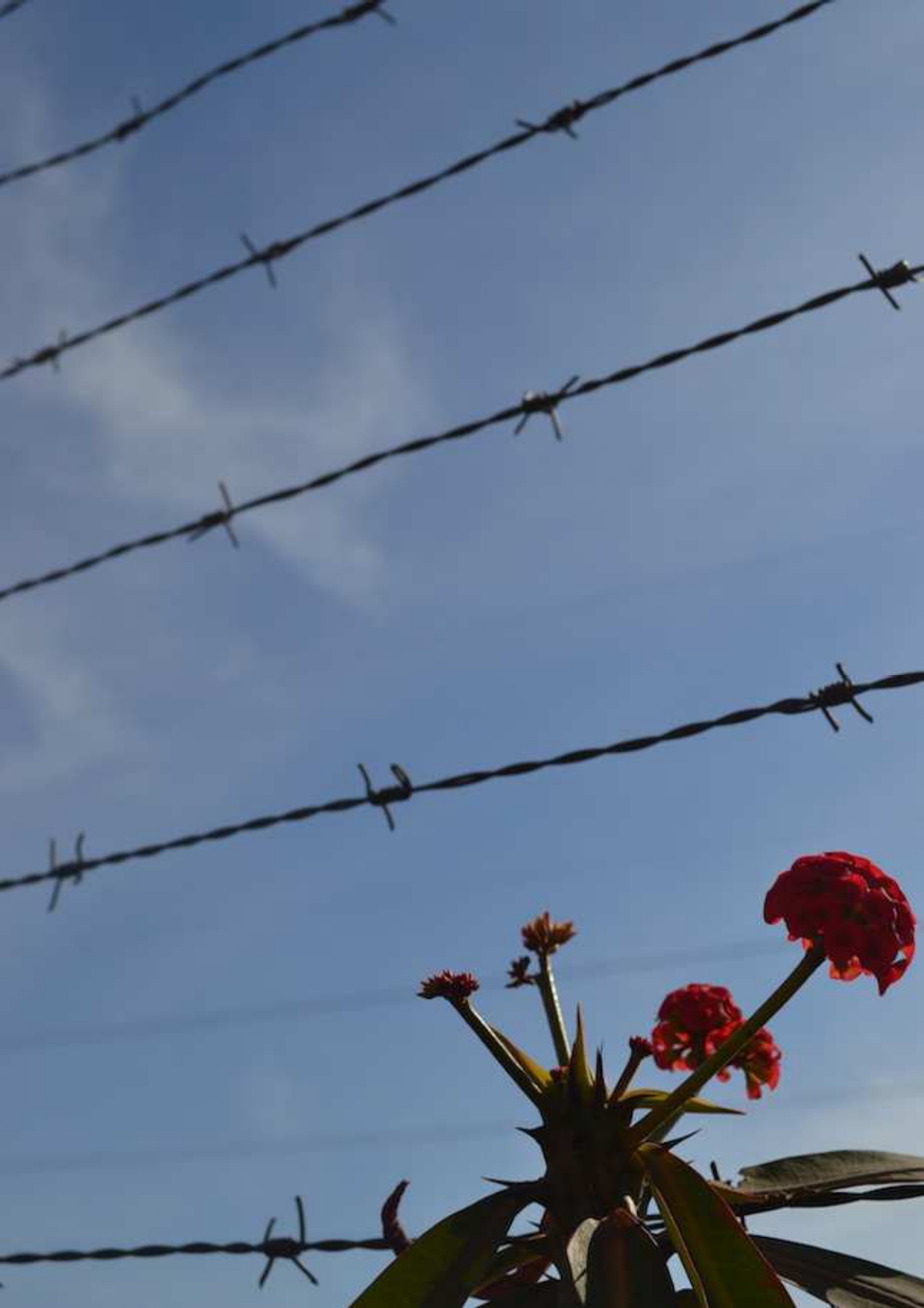
Inquietude is pleased to announce the release of its fifth edition. One more number taken form demonstrates the continuous development to the commitment established from the roots of the editorial project. Since its foundation, it proposes to encourage, together with undergraduate and graduate students, a wide space of research incentive and provide visibility to the work of students from the most varied university institutions in the country [and abroad]. In order for the dialogue not to come down to the isolated philosophical production, the journal opens up to the plurality philosophy provides in its various ways, without forgetting the rigor and qualification of the debate.
Proof that the journal has been consolidated was the large number of texts submitted to the selection: the reader has a variety of subjects and authors. For the readings to be located, the articles will be minimally presented. Less a review of each of the texts, more an invitation to stroll through the various problems and perspectives this edition brings up.
In the first section, we begin with a debate dear to all political philosophy, Locke and the tension between government and civil society [by Darley Alves Fernandes]. In an attempt to rescue the importance of Auguste Comte in the philosophy of sciences, his main concepts are reevaluated by the authors [Denis Paulo Goldfarb; Domingos Gomes Rodrigues; Onofre Crossi Filho; Rita de Cássia Foelker] in the text Auguste Comte's philosophy of science: Clearing the Comtean thought of historical misunderstandings. The article entitled Fusion of horizons: Fundamental features in the ontology of Hans-Georg Gadamer [by Gabriela Miranda Zabeu] is committed to work on the hermeneutic and phenomenological structures necessary to understand the conjuncture of Gadamer's ontology. Then, in the context of logic, we have the article regarding the nature of its investigations, entitled On Tarski: About the logical consequence [by Hermógenes Hebert Pereira Oliveira]. The theme of anguish, notably philosophical, inaugurated in the considerations of the Danish philosopher Søren Kierkegaard, is discussed in the work Freedom and anguish in Kierkegaard’s The concept of anxiety [by Jadson Teles Silva]. Finally, completing this first section, the Sartrean philosophy is addressed in the article The fundamental project of the for-itself: An analysis of a possible conscious being (in-itself-for-itself) in Sartre’s thought [by Polyelton de Oliveira Lima].
In the Special Section, we have the jointly prepared article, The impertinent self: Romanticism, the agonal self and gangster film, fruit of the study project Kinosophia, coordinated by Professor Carla Milani Damião. The article discusses the issue of the return of the hero and the tragic in modernity, related to the philosophy of cinema, focus of studies in the group. We expose in the last section, usually destined to the selected works at the Philosophy Week, the work presented in 2012, Genealogical Foucault: Method considerations for the possibility of an analysis of power. In this text, the author [João Lourenço Borges Neto] presents the development of the genealogical method and the conditions to establish a diagnosis of power in Foucault, especially by Nietzschean inspiration.
**********************************************************************************************
DOSSIER "BIOPOLITICS"
Since the selection of the present issue cover, we orient the journal to the Dossier inspired by the "3rd Biopolitics Colloquium. Violence and State of Exception", which was held in December in Goiânia. Onto the Colloquium, which successfully aimed to give visibility and consolidate the discussions that already took place in the biopolitical study group six years ago, we extended the debate and brought it up to the edition.
Seeking the analysis of politics guided by the contemporary world's deep crisis, we bring to the Dossier of this edition the theme of Biopolitics: Violence and State of Exception. This theme has become much studied, mainly by the work of the Italian philosopher Giorgio Agamben, deeply influenced by philosophers such as Michel Foucault, Hannah Arendt, Walter Benjamin. The paradigm of biopolitical discussion is found by the end of The will to knowledge, in Michel Foucault's The history of sexuality, where the State, on the threshold of modernity, includes care for natural life, nuda vita, in its management through the mechanisms and calculations of the State power.
This is the political paradigm of modernity. The entry of the zoé in the polis' sphere, the politicization of naked life radically transformed the political-philosophical categories of classical thought. An enigma that, according to Agamben, seems to be solved only in biopolitical categories. In this zone of indiscernibility between politics and life, it remains for the politician to come out of his concealment and restore his practical vocation. The update of Agamben’s thought through the convergence of Arendt and Foucault, makes us wonder if the production of a biopolitical body would not be the original contribution of sovereign power. Following the example of the 8th thesis On the concept of history by Walter Benjamin, where "the tradition of the oppressed teaches us that the state of exception in which we live is actually the general rule".
Recognizing the team’s enthusiasm in putting together the Dossier and presenting the theme, the edition follows with the texts that were presented at the Colloquium. An urban battle: Power and resistance in Rio de Janeiro city [by Erick Araujo de Assumpção and Fermin Roland Schramm] shows us how the problem of biopolitics is deeply aligned with contemporary reality. In the text When language becomes noise: Actual violence in times of virtual blah-blah-blah [by Pedro Lucas Dulci], another demonstration of how, subliminally, spaces of exception and their double paradoxical link reach the most varied problems of human life. The relation between the modes of subjectivation present in the context of biopower and contemporary capitalism shape the work The management of capital life and the constitution of the homo dispensatio [by Rogério Luis da Rocha Seixas]. The thesis of Peter Sloterdijk in response to Heidegger’s Letter on humanism underlies the article The crisis of humanism: Contributions towards biopolitics [by Wanderley J. Ferreira Jr.].
Last but not least, we present as the conclusion of the Dossier the interview with Castor Ruiz, Professor at Unisinos [University of Rio dos Sinos Valley]/RS, one of the main scholars on the subject of biopolitics today, entitled Human life, a philosophical problem. The interview [by Carmelita Brito and Rosângela Chaves] responds to issues relevant to all biopolitical problems of our time and presents, with didactic clarity, but without losing conceptual rigor, a good introduction to the subject for those interested in it and first-time readers. Professor Castor clarifies questions such as: the genealogical and archaeological method, and what he calls archeogenealogical; the sacredness of human life, one of the main subjects of his study could not be left out; clarifications about the paradox and aporia of the studies of biopolitics; the actuality of the biopolitics concept and its main developments, both in Foucault’s considerations, as well as in those of Agamben; truth commission in Brazil, memory and the dictatorships of Latin America of the twentieth century.
**********************************************************************************************
In this year, when the journal will complete four years of existence, renewing the participation of students, we welcome the new members, Fernando Ferreira, Leonardo Siqueira Gonçalves and Willian Bento Barbosa, who integrate the team to the already presented Heitor Pagliaro, Luana Lopes Xavier, Nádia Junqueira Ribeiro and Suélen Rosa de Castro, all of breath renewed for another launch. In addition, considering the importance of establishing dialogue between student journals, we inform that Inquietude has strengthened ties and established a partnership with Pólemos (Brasilia University Students' Journal of Philosophy), which has already resulted in a fruitful exchange of information at the round-table held in Brasilia, still in 2012.
For the publication of this edition, once again we used the inspirational air of Goiás City, and we integrated with the events 2nd ENEPEFIL - National Meeting of Teaching and Research in Philosophy and 4th I Think - Meeting of Students of Philosophy of Goiás City. This proposal aimed to update the necessary link between Teaching, Research and Extension in the field of philosophy, bringing the journal even closer to its main target, mainly students.
Finally, we thank those people who made possible another release of Inquietude. We thank the professors of the undergraduate and graduate course in Philosophy at UFG [Federal University of Goiás], the editorial professors Adriana Delbó and Júlia Sebba Ramalho Morais, the entire Editorial Staff, the technical support of Renato Mendes Rocha and the layout of Pedro Labaig; the authors of the texts, the Study Group in Biopolitics, which in accordance with the journal, assisted the forwarding of the Dossier, together with the authors of the Special Section and other members and collaborators of the journal. Our special thanks to the reviewers who analyzed our texts; without them, this edition would be impossible.
We invite the reader to restlessness, we renew the invitation to becoming restless.
The Editors
-
Vol. 3 No. 1 (2012)
With great impetus we bring to public this fifth issue of Inquietude. Entering its third year of existence, the journal establishes itself as a vehicle for the production and dissemination of ideas from young students who restlessly yearn to be heard. This edition is a symptom of such restlessness, since we had the opportunity to receive and select, once again, a large contingent of texts from undergraduate and graduate students from most diverse universities in the country. This issue has, therefore, with eight articles written by students, a special publication coordinated by Professor Carla Milani Damião (Federal University of Goiás - UFG) together with students of the Study Group Kinosophia, an interview with Professor Vladimir Safatle (São Paulo University - USP) and the abstracts of the dissertations defended in the Graduate Program of UFG in 2011.
The reader can observe in the current issue a discussion around the Heideggerian concept of Dasein, where the author [Eliana Borges da Silva] analyzes how Heidegger operates the destruction, or deconstruction, of the traditional concept of existence, especially addressed by the Middle Ages ontology. Still in the phenomenological-existential background of contemporary philosophy, we find an article [by Aron Pilotto Barco] on Husserl that analyzes the meaning and the various nuances of the term "now" in Husserl’s theory. We know Heidegger’s philosophy influenced to some extent not only phenomenology, but also contemporary hermeneutics. In this record, we find in the present edition an approach [by Filipe Silveira de Araújo] on the aesthetic experience in hermeneutic thinking in light of the philosophy of Gianni Vattimo and the Gadamerian interlocutions.
For other areas of contemporary philosophy, the reader will encounter the problem of the concept of intentionality in Philosophy of Mind addressed [by André Rosolem Sant'Anna] through the perspective of John Searle and Daniel Dennett. And, in more diverse soils, you can benefit from the analysis of the concept of violence-power in the philosophy of Walter Benjamin [by José Gilardo Carvalho], as well as the Foucaultian notion of governmentality [by Leandro Alves Martins de Menezes].
Going to modern philosophy, a text [by Filicio Mulinari] on Kant invites us to enter the pre-critical period, where the first Kantian thoughts already outlined important later arguments about the concept and predicate of existence. And finally, we have a text on Rousseau, where the author [Heitor Pagliaro] investigates the philosopher’s conception of law and seeks to analyze to what extent we can qualify his theory as jusnaturalist.
In this edition, we have the first of a series of special publications related to the course given by professor Josef Früchtl at the UFG’s Faculty of Philosophy in August 2011. The course taught was based on his book The impertinent self. A heroic history of modernity and was translated and discussed by the Kinosophia Study Group, coordinated by Professor Carla Damião. The result of this study and discussion are three articles that Inquietude has the honor to publish and disseminate. The first of this triad is entitled Modernity, subjectivity, Hegel and the Western and addresses especially the association between the idea of the philosophical self to the figure of the hero found in some cinematographic genres.
On the occasion of the 14th International Festival of Environmental Cinema (FICA), which took place in Goiás City from June 26th to July 7th, we had the opportunity to conduct an inspiring dialogue with Professor Vladimir Safatle from USP. In the interview, we dealt with current issues, such as the strike of the Federal Universities professors, the case of Cachoeira, as well as issues like politics and culture.
The publication of this edition is the result of an intense work of the entire Editorial Staff, which has been significantly renewed. In the last edition we said goodbye to our executive editor, Carmelita Brito, and our chief editor, Adriano Correia. In their places, respectively, we now have the collaboration of Júlia Sebba (from the Philosophy Course of Goiás City) and Adriana Delbó, from the Faculty of Philosophy of UFG. Members who have been following this project since the first edition also said goodbye to us in the last number and then we received four new members to reinvigorate our work with their ideas and impulses. Our sincere thanks to Caius Brandão, Marcela Castanheira, Renato Mendes and Wigvan Pereira for their important contribution with Inquietude and our welcome to the new members: Heitor Pagliaro, Luana Xavier, Nádia Junqueira and José Ramos.
This number comes to public amid the strike that is spreading by the Federal Universities throughout the country. It is therefore with difficulties that we managed to launch this edition. Out of respect for the authors who sent us and entrusted their texts and out of respect for our established deadlines and calendars, we publish this issue - even at a time of negotiations and political reflections by professors and staff from IFES [Federal Higher-Education Institutions]. Our already traditional Launch event, organized with each new edition, was not held on the occasion of this issue due to the suspension of academic activities at UFG.
Finally, we would like to thank all those who contributed to the execution of this edition. To the professors and specialists who evaluated with attention the texts submitted to us, to the professors of the Faculty of Philosophy (FaFil) and the Course of Philosophy from the Campus of Goiás for the support and collaboration, to Professor Carmelita that continues always near helping us in this walk and, of course, to the authors who for now publish their texts and those who have sent us their articles. We invite all the restless youth to new submissions - without this our project would not thrive.
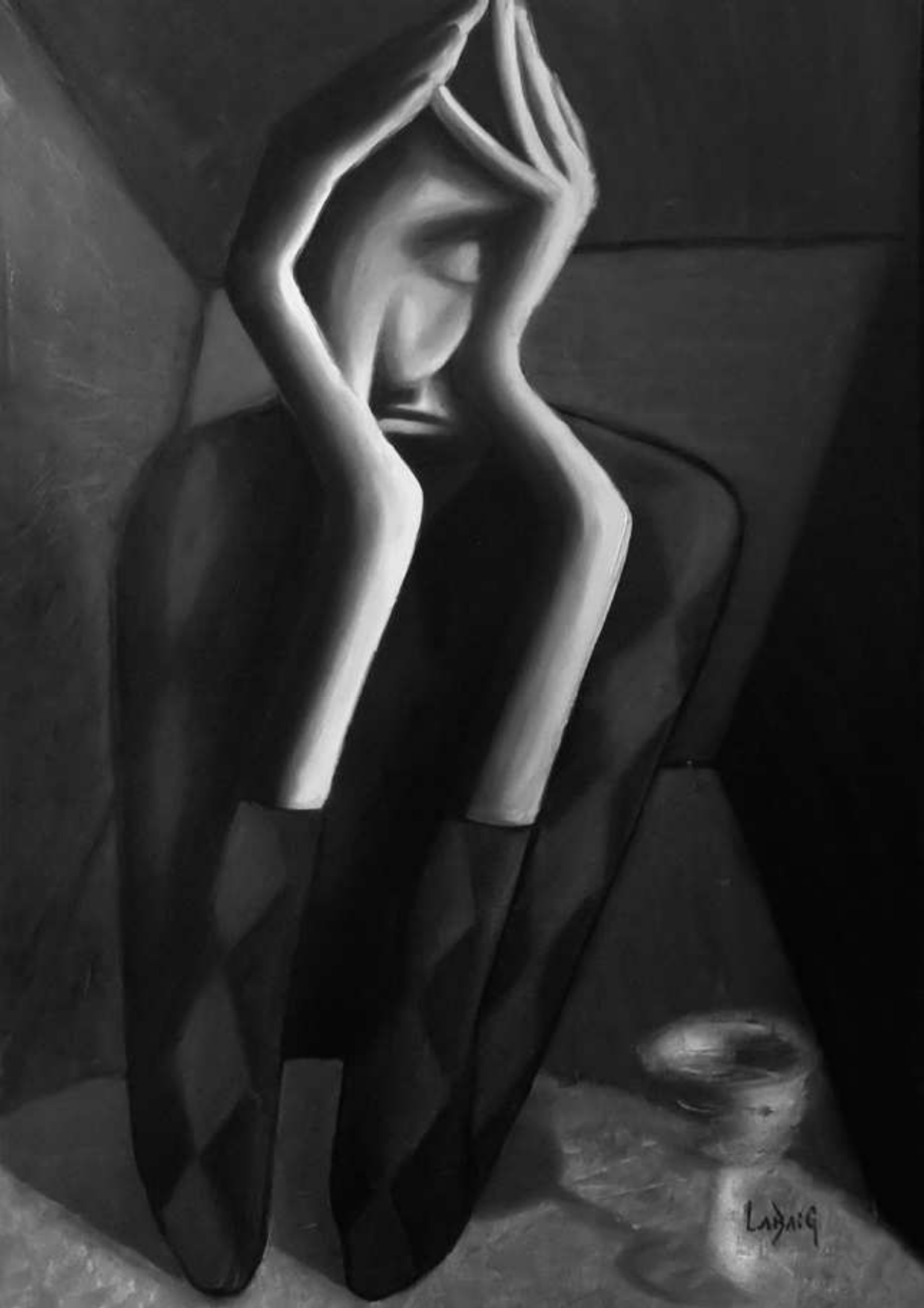
With a final invitation, we would like to close this editorial, calling the reader to begin their journey contemplating the figure that opens this edition: it is a painting entitled "The Problem", by Pedro Labaig - young painter who had been part of our editorial staff in the first two editions. The painting draws us to think what is the meaning of philosophy without problematizing it, what is the meaning of philosophy that does not torment with what touches us. The figure calls us to collect on ourselves and to thresh ourselves onto what challenges us - this is the exercise of the restless philosophizing the reader will do in the sequence. Good (and restless) reading!
We say goodbye with renewed impetus for the next numbers and meetings.
The Edition
-

Vol. 2 No. 2 (2011)
How long does it take for something we plant to bear its most beautiful fruits? We, of Inquietude, are certain the results of the activity of the spirit do not take time to overcome and appear; but, at the same time, we cannot fail to hope (along with Nietzsche) the passage of time will leave them "more mature, clearer, stronger, perfect!". Two years after the publication of its first issue, the journal is proud to reach its fourth issue consolidating its function of disseminating academic works written by students, combining the restlessness - typical of youth and philosophy - with the rigor expected in academia and acquired with experience (hopefully this combination will remain in the journal for a long time to come!).
Within this framework, the new edition is marked by the plurality of perspectives, with several articles starting from this otherness to form a common core of investigations on what constitutes philosophy, what characterizes its language and how it relates to the language of the world. The alterity - indeed, our Latin American and Brazilian otherness, if this territory can be clearly demarcated - is the theme of one of the articles in this edition, which seeks [by Elzahrã Radwan Osman] the space of an identity of Brazilian thought. The problem of the relation of thought with any language, on the other hand, and of their relations with the world, is addressed in an article [by Diogo Bogéa] that proposes to explore Nietzschean reflections on metaphor related to rhetorical discourse and logical and conceptual language.
By another way and method (way and method is a tautology, but we allow the expression due to the relevance of the emphasis), two articles embark on this issue, even though they turn to related problems. One of them [by Jeane Vanessa Silva] verifies whether epistemic logic is able to establish an Archimedean point for knowledge, through the semantics of possible worlds; or, in other words, if the exhaustive analysis of relevant possibilities of reality configuration, verified by an epistemic agent in a given position, allows to establish safe conditions for knowledge. Meanwhile, the other article we refer to [by Gabriel Cardoso Galli], seeking to shield exactly the boundary between knowledge of propositive type and judgements of ethical value, analyzes the position (and importance) of these statements "devoid of meaning" (that is, those issued by Ethics) in the first Wittgenstein's philosophy.
It is in a different register that political philosophy is found, whenever it proposes to analyze the world and occasionally suggesting ways of acting on it; this is also the scope of the reflections of the article [by Daniel Silva Barbosa] that we publish in this edition on the causes and ways of mitigation of pauperism, from the reflections of Alexis de Tocqueville. Now, suggesting ways of acting on the world presupposes a way of valuing actions; but in what terms can this valuation be made? One of the many answers to this question is also presented in this issue, through the publication of the translation [by Janos Biro] of unpublished text by Professor Paul Boghossian, from the University of New York, in which he proposes to demonstrate the aporia of the position he calls "moral relativism".
Analyzing the possible scope of political action (or where it becomes impossible) was one of the tasks the philosopher and political theorist Hannah Arendt set herself. In this edition, we are launching a thematic Dossier in commemoration of the 60th anniversary of the release of the work The origins of totalitarianism. The passage of half a century, we verify with regret, did not remove the relevance of the work. Behind the specific analyses that the rigor of historiography may have partially disputed over time, what is observed is that there is an attempt to establish a discourse about what we are today, how contemporary man and politics are constituted. The photo chosen for the cover of this issue - the railroad tracks that once led millions of human beings to death in extermination camps - is also, on some level, a warning: the roads that lead us to the most terrible destinations are still open; we must keep the memory, not to resent, but to know how far we are still in the same direction.
To close this Editorial we thank all the people who made this edition (and its Dossier) possible; the Editorial Team, the collaborations (so crucial in the work of diagramming, revision, layout, dissemination), authors and translators of the texts sent and the support of PROEC-UFG (Vice-Rectorate of Extension and Culture at the Federal University of Goiás). We hope the result of this collective work will be, for each one of our readers, productive and pleasant. Good reading.
The Edition
**********************************************************************************************
DOSSIER "ORIGINS OF TOTALITARIANISM - 6O YEARS"
In a letter sent to the philosopher Karl Jaspers, dated May 14th 1951, very little time after the publication of the first edition of The origins of totalitarianism, Hannah Arendt asks her master and friend: "Did I write to you that a week ago I became a 'cover girl' and had to look at myself on all the newsstands?" (Elisabeth Young-Bruehl, Hannah Arendt: for love of the world, 1982, p. x).
The author’s perplexity with the sudden success and wide circulation, at the time, of her recent and first published book, may be incomprehensible and indifferent to our retrospective look. Sixty years ahead of time, we already know the historical importance and intellectual strength of such a work that was completed in the fall of 1949, despite all the conditions that disadvantaged the production of such an in-depth historical-philosophical-political study. The origins of totalitarianism was written by a European refugee, based in the United States, still in the fervor of the events of the Second World War (although far from them "an Atlantic ocean" to maintain her own security due to Arendt’s Jewish ancestry). The manuscript was completed four years after the end of the world confrontation and the consequent defeat of Hitler’s Germany, and four years before the death of Stalin, in a time of scarce and carpeted information, in a context where talking about the tragic events of the twentieth century already seemed to be taboo and in which the notion of future falls into two possibilities: the indescribable fear of prophecies about the final ruin of human times and the immeasurable hope before the end of a dark passage in human History.
Thus, in addition to being certainly a pioneer in the analysis of events, origins and totalitarian elements - which Arendt identifies both in Nazi Germany and in Stalinist Russia, generating numerous controversies even today - the author was also singular in her thought, in her theses and examinations formulated from the factual occurrences that composed the core of her era, "the central event of our world" (Understanding and politics, 1954, p. 308).
The attempt to understand totalitarianism in its frightening novelty, as well as the questions that the author herself poses (What had happened? Why had it happened? How could it have happened?) cover several areas of knowledge beyond philosophical exclusivity, as History, Social Sciences, Communications, Psychology, Law, etc.
It is with this in mind that, in its fourth edition, Inquietude presents the thematic Dossier "Origins of Totalitarianism - 60 years", with the intention to provoke and revive discussions about the first Hannah Arendt's published work. Sixty years later, it may still be necessary to ponder why this work remains so present. Certainly, if we cannot "give a positive answer on the possibility of the emergence of a totalitarian regime today", this does not mean "it is [not] possible on the more general ground of human possibilities, [since] various factors lead us to fear the present conditions resemble others in which this experience took place" (Newton Bignotto, Origens do totalitarismo – 50 anos depois, 2001, p. 44, free translation).
Included in the Dossier is Totalitarismo, unpublished text by Arendt, which gathers notes for a lecture held in 1954, translated by Professor Adriano Correia, of the Faculty of Philosophy at the Federal University of Goiás (FaFil-UFG).
Igor Vinícius Basílio Nunes
-
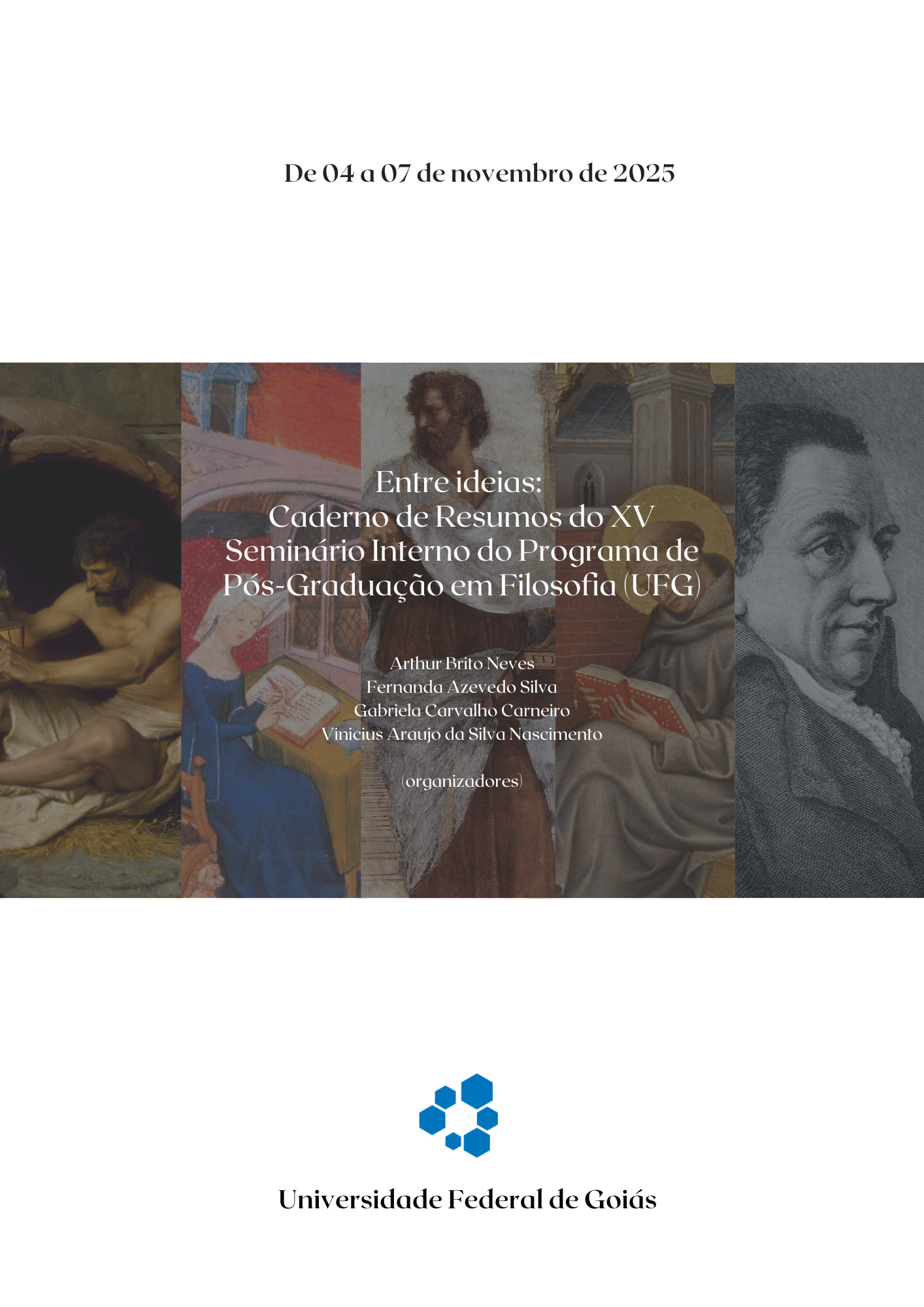
Caderno de resumos - XV Seminário Interno do Programa de Pós-Graduação em Filosofia - UFG
A Revista Inquietude tem o prazer de divulgar o Caderno de resumos - XV Seminário Interno do Programa de Pós-Graduação em Filosofia - UFG, evento ocorrido entre os dias 04 e 07 de novembro de 2025. O Seminário Interno do Programa de Pós-Graduação em Filosofia da Universidade Federal de Goiás (PPGFil-UFG) é um evento anual que visa, por meio da exposição e do debate, aprimorar as pesquisas realizadas pelas(os) discentes do PPGFil e dos acadêmicos externos que desejam contribuir com apresentações e debates filosóficos. Nesse evento, discentes apresentam suas pesquisas em andamento e recebem comentários e sugestões de docentes e colegas da UFG. Neste ano, especialmente, o Seminário recebeu o título de Entre ideias e comemora sua XV edição, consolidando e confirmando a excelência da pesquisa filosófica na UFG.
Previous
26-32 of 32