
Vol. 2 No. 2 (2011)
How long does it take for something we plant to bear its most beautiful fruits? We, of Inquietude, are certain the results of the activity of the spirit do not take time to overcome and appear; but, at the same time, we cannot fail to hope (along with Nietzsche) the passage of time will leave them "more mature, clearer, stronger, perfect!". Two years after the publication of its first issue, the journal is proud to reach its fourth issue consolidating its function of disseminating academic works written by students, combining the restlessness - typical of youth and philosophy - with the rigor expected in academia and acquired with experience (hopefully this combination will remain in the journal for a long time to come!).
Within this framework, the new edition is marked by the plurality of perspectives, with several articles starting from this otherness to form a common core of investigations on what constitutes philosophy, what characterizes its language and how it relates to the language of the world. The alterity - indeed, our Latin American and Brazilian otherness, if this territory can be clearly demarcated - is the theme of one of the articles in this edition, which seeks [by Elzahrã Radwan Osman] the space of an identity of Brazilian thought. The problem of the relation of thought with any language, on the other hand, and of their relations with the world, is addressed in an article [by Diogo Bogéa] that proposes to explore Nietzschean reflections on metaphor related to rhetorical discourse and logical and conceptual language.
By another way and method (way and method is a tautology, but we allow the expression due to the relevance of the emphasis), two articles embark on this issue, even though they turn to related problems. One of them [by Jeane Vanessa Silva] verifies whether epistemic logic is able to establish an Archimedean point for knowledge, through the semantics of possible worlds; or, in other words, if the exhaustive analysis of relevant possibilities of reality configuration, verified by an epistemic agent in a given position, allows to establish safe conditions for knowledge. Meanwhile, the other article we refer to [by Gabriel Cardoso Galli], seeking to shield exactly the boundary between knowledge of propositive type and judgements of ethical value, analyzes the position (and importance) of these statements "devoid of meaning" (that is, those issued by Ethics) in the first Wittgenstein's philosophy.
It is in a different register that political philosophy is found, whenever it proposes to analyze the world and occasionally suggesting ways of acting on it; this is also the scope of the reflections of the article [by Daniel Silva Barbosa] that we publish in this edition on the causes and ways of mitigation of pauperism, from the reflections of Alexis de Tocqueville. Now, suggesting ways of acting on the world presupposes a way of valuing actions; but in what terms can this valuation be made? One of the many answers to this question is also presented in this issue, through the publication of the translation [by Janos Biro] of unpublished text by Professor Paul Boghossian, from the University of New York, in which he proposes to demonstrate the aporia of the position he calls "moral relativism".
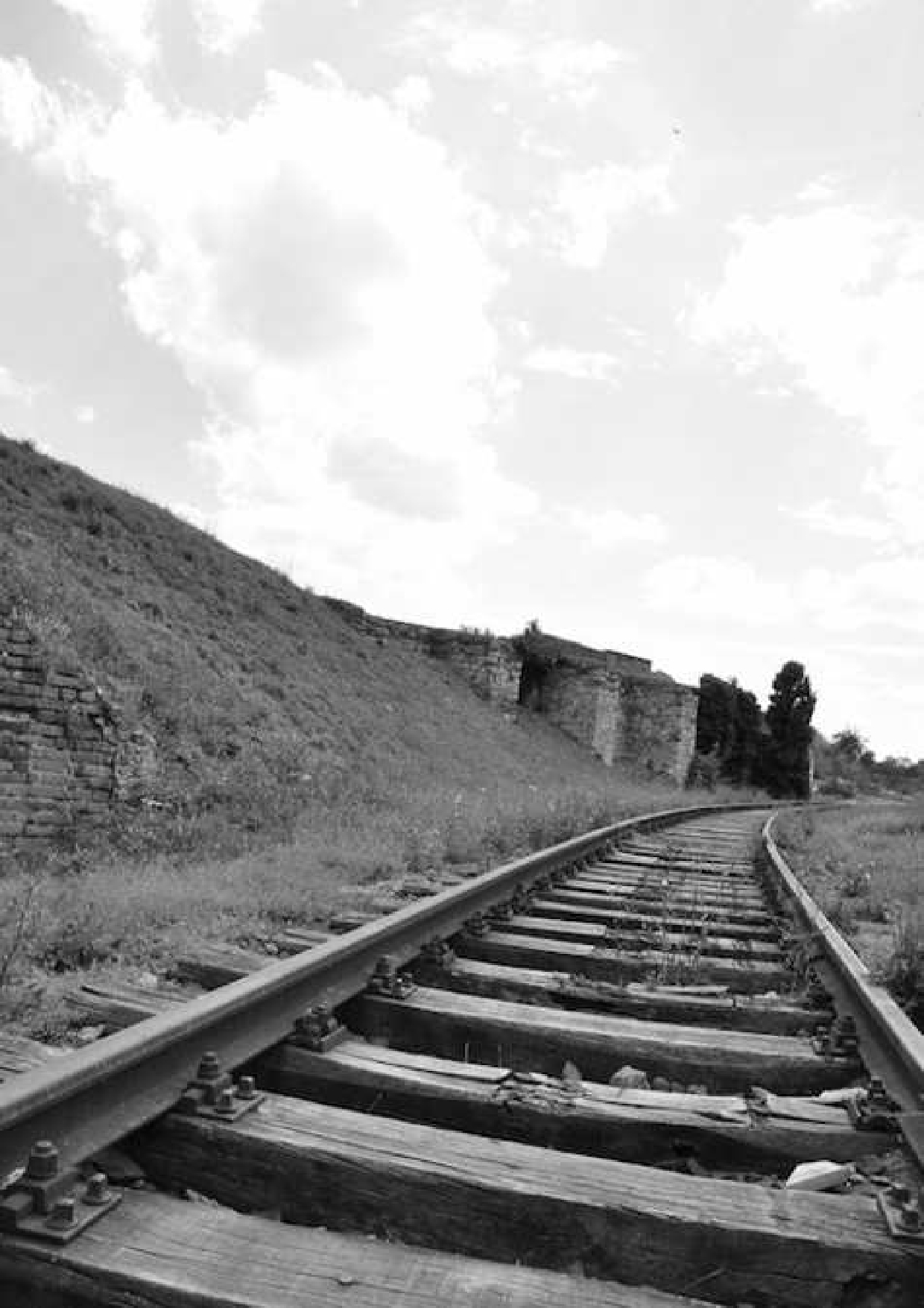
Analyzing the possible scope of political action (or where it becomes impossible) was one of the tasks the philosopher and political theorist Hannah Arendt set herself. In this edition, we are launching a thematic Dossier in commemoration of the 60th anniversary of the release of the work The origins of totalitarianism. The passage of half a century, we verify with regret, did not remove the relevance of the work. Behind the specific analyses that the rigor of historiography may have partially disputed over time, what is observed is that there is an attempt to establish a discourse about what we are today, how contemporary man and politics are constituted. The photo chosen for the cover of this issue - the railroad tracks that once led millions of human beings to death in extermination camps - is also, on some level, a warning: the roads that lead us to the most terrible destinations are still open; we must keep the memory, not to resent, but to know how far we are still in the same direction.
To close this Editorial we thank all the people who made this edition (and its Dossier) possible; the Editorial Team, the collaborations (so crucial in the work of diagramming, revision, layout, dissemination), authors and translators of the texts sent and the support of PROEC-UFG (Vice-Rectorate of Extension and Culture at the Federal University of Goiás). We hope the result of this collective work will be, for each one of our readers, productive and pleasant. Good reading.
The Edition
**********************************************************************************************
DOSSIER "ORIGINS OF TOTALITARIANISM - 6O YEARS"
In a letter sent to the philosopher Karl Jaspers, dated May 14th 1951, very little time after the publication of the first edition of The origins of totalitarianism, Hannah Arendt asks her master and friend: "Did I write to you that a week ago I became a 'cover girl' and had to look at myself on all the newsstands?" (Elisabeth Young-Bruehl, Hannah Arendt: for love of the world, 1982, p. x).
The author’s perplexity with the sudden success and wide circulation, at the time, of her recent and first published book, may be incomprehensible and indifferent to our retrospective look. Sixty years ahead of time, we already know the historical importance and intellectual strength of such a work that was completed in the fall of 1949, despite all the conditions that disadvantaged the production of such an in-depth historical-philosophical-political study. The origins of totalitarianism was written by a European refugee, based in the United States, still in the fervor of the events of the Second World War (although far from them "an Atlantic ocean" to maintain her own security due to Arendt’s Jewish ancestry). The manuscript was completed four years after the end of the world confrontation and the consequent defeat of Hitler’s Germany, and four years before the death of Stalin, in a time of scarce and carpeted information, in a context where talking about the tragic events of the twentieth century already seemed to be taboo and in which the notion of future falls into two possibilities: the indescribable fear of prophecies about the final ruin of human times and the immeasurable hope before the end of a dark passage in human History.
Thus, in addition to being certainly a pioneer in the analysis of events, origins and totalitarian elements - which Arendt identifies both in Nazi Germany and in Stalinist Russia, generating numerous controversies even today - the author was also singular in her thought, in her theses and examinations formulated from the factual occurrences that composed the core of her era, "the central event of our world" (Understanding and politics, 1954, p. 308).
The attempt to understand totalitarianism in its frightening novelty, as well as the questions that the author herself poses (What had happened? Why had it happened? How could it have happened?) cover several areas of knowledge beyond philosophical exclusivity, as History, Social Sciences, Communications, Psychology, Law, etc.
It is with this in mind that, in its fourth edition, Inquietude presents the thematic Dossier "Origins of Totalitarianism - 60 years", with the intention to provoke and revive discussions about the first Hannah Arendt's published work. Sixty years later, it may still be necessary to ponder why this work remains so present. Certainly, if we cannot "give a positive answer on the possibility of the emergence of a totalitarian regime today", this does not mean "it is [not] possible on the more general ground of human possibilities, [since] various factors lead us to fear the present conditions resemble others in which this experience took place" (Newton Bignotto, Origens do totalitarismo – 50 anos depois, 2001, p. 44, free translation).
Included in the Dossier is Totalitarismo, unpublished text by Arendt, which gathers notes for a lecture held in 1954, translated by Professor Adriano Correia, of the Faculty of Philosophy at the Federal University of Goiás (FaFil-UFG).
Igor Vinícius Basílio Nunes
Published:
2011-12-08