

Vol. 3 No. 2 (2012)
Inquietude is pleased to announce the release of its fifth edition. One more number taken form demonstrates the continuous development to the commitment established from the roots of the editorial project. Since its foundation, it proposes to encourage, together with undergraduate and graduate students, a wide space of research incentive and provide visibility to the work of students from the most varied university institutions in the country [and abroad]. In order for the dialogue not to come down to the isolated philosophical production, the journal opens up to the plurality philosophy provides in its various ways, without forgetting the rigor and qualification of the debate.
Proof that the journal has been consolidated was the large number of texts submitted to the selection: the reader has a variety of subjects and authors. For the readings to be located, the articles will be minimally presented. Less a review of each of the texts, more an invitation to stroll through the various problems and perspectives this edition brings up.
In the first section, we begin with a debate dear to all political philosophy, Locke and the tension between government and civil society [by Darley Alves Fernandes]. In an attempt to rescue the importance of Auguste Comte in the philosophy of sciences, his main concepts are reevaluated by the authors [Denis Paulo Goldfarb; Domingos Gomes Rodrigues; Onofre Crossi Filho; Rita de Cássia Foelker] in the text Auguste Comte's philosophy of science: Clearing the Comtean thought of historical misunderstandings. The article entitled Fusion of horizons: Fundamental features in the ontology of Hans-Georg Gadamer [by Gabriela Miranda Zabeu] is committed to work on the hermeneutic and phenomenological structures necessary to understand the conjuncture of Gadamer's ontology. Then, in the context of logic, we have the article regarding the nature of its investigations, entitled On Tarski: About the logical consequence [by Hermógenes Hebert Pereira Oliveira]. The theme of anguish, notably philosophical, inaugurated in the considerations of the Danish philosopher Søren Kierkegaard, is discussed in the work Freedom and anguish in Kierkegaard’s The concept of anxiety [by Jadson Teles Silva]. Finally, completing this first section, the Sartrean philosophy is addressed in the article The fundamental project of the for-itself: An analysis of a possible conscious being (in-itself-for-itself) in Sartre’s thought [by Polyelton de Oliveira Lima].
In the Special Section, we have the jointly prepared article, The impertinent self: Romanticism, the agonal self and gangster film, fruit of the study project Kinosophia, coordinated by Professor Carla Milani Damião. The article discusses the issue of the return of the hero and the tragic in modernity, related to the philosophy of cinema, focus of studies in the group. We expose in the last section, usually destined to the selected works at the Philosophy Week, the work presented in 2012, Genealogical Foucault: Method considerations for the possibility of an analysis of power. In this text, the author [João Lourenço Borges Neto] presents the development of the genealogical method and the conditions to establish a diagnosis of power in Foucault, especially by Nietzschean inspiration.
**********************************************************************************************
DOSSIER "BIOPOLITICS"
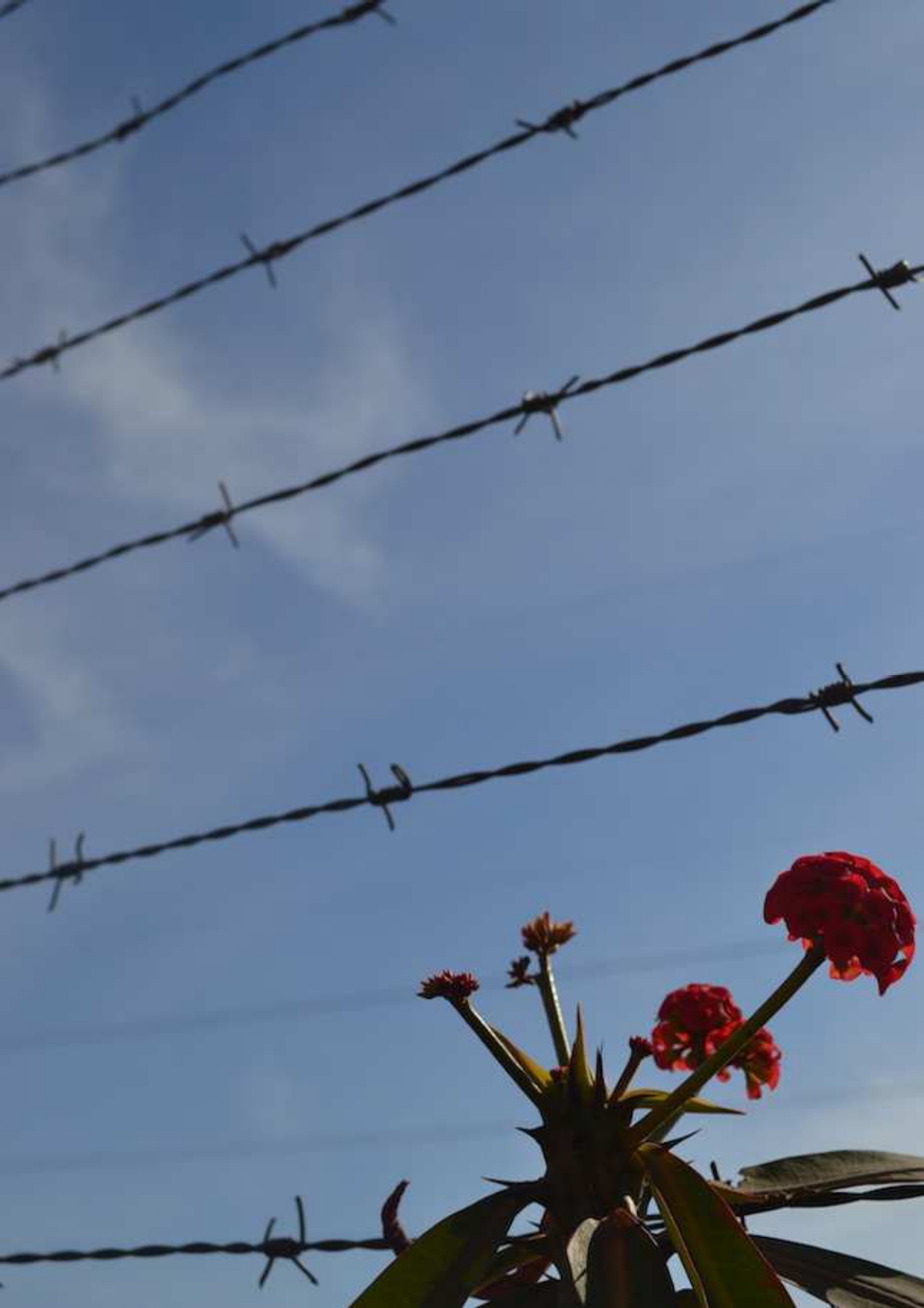
Since the selection of the present issue cover, we orient the journal to the Dossier inspired by the "3rd Biopolitics Colloquium. Violence and State of Exception", which was held in December in Goiânia. Onto the Colloquium, which successfully aimed to give visibility and consolidate the discussions that already took place in the biopolitical study group six years ago, we extended the debate and brought it up to the edition.
Seeking the analysis of politics guided by the contemporary world's deep crisis, we bring to the Dossier of this edition the theme of Biopolitics: Violence and State of Exception. This theme has become much studied, mainly by the work of the Italian philosopher Giorgio Agamben, deeply influenced by philosophers such as Michel Foucault, Hannah Arendt, Walter Benjamin. The paradigm of biopolitical discussion is found by the end of The will to knowledge, in Michel Foucault's The history of sexuality, where the State, on the threshold of modernity, includes care for natural life, nuda vita, in its management through the mechanisms and calculations of the State power.
This is the political paradigm of modernity. The entry of the zoé in the polis' sphere, the politicization of naked life radically transformed the political-philosophical categories of classical thought. An enigma that, according to Agamben, seems to be solved only in biopolitical categories. In this zone of indiscernibility between politics and life, it remains for the politician to come out of his concealment and restore his practical vocation. The update of Agamben’s thought through the convergence of Arendt and Foucault, makes us wonder if the production of a biopolitical body would not be the original contribution of sovereign power. Following the example of the 8th thesis On the concept of history by Walter Benjamin, where "the tradition of the oppressed teaches us that the state of exception in which we live is actually the general rule".
Recognizing the team’s enthusiasm in putting together the Dossier and presenting the theme, the edition follows with the texts that were presented at the Colloquium. An urban battle: Power and resistance in Rio de Janeiro city [by Erick Araujo de Assumpção and Fermin Roland Schramm] shows us how the problem of biopolitics is deeply aligned with contemporary reality. In the text When language becomes noise: Actual violence in times of virtual blah-blah-blah [by Pedro Lucas Dulci], another demonstration of how, subliminally, spaces of exception and their double paradoxical link reach the most varied problems of human life. The relation between the modes of subjectivation present in the context of biopower and contemporary capitalism shape the work The management of capital life and the constitution of the homo dispensatio [by Rogério Luis da Rocha Seixas]. The thesis of Peter Sloterdijk in response to Heidegger’s Letter on humanism underlies the article The crisis of humanism: Contributions towards biopolitics [by Wanderley J. Ferreira Jr.].
Last but not least, we present as the conclusion of the Dossier the interview with Castor Ruiz, Professor at Unisinos [University of Rio dos Sinos Valley]/RS, one of the main scholars on the subject of biopolitics today, entitled Human life, a philosophical problem. The interview [by Carmelita Brito and Rosângela Chaves] responds to issues relevant to all biopolitical problems of our time and presents, with didactic clarity, but without losing conceptual rigor, a good introduction to the subject for those interested in it and first-time readers. Professor Castor clarifies questions such as: the genealogical and archaeological method, and what he calls archeogenealogical; the sacredness of human life, one of the main subjects of his study could not be left out; clarifications about the paradox and aporia of the studies of biopolitics; the actuality of the biopolitics concept and its main developments, both in Foucault’s considerations, as well as in those of Agamben; truth commission in Brazil, memory and the dictatorships of Latin America of the twentieth century.
**********************************************************************************************
In this year, when the journal will complete four years of existence, renewing the participation of students, we welcome the new members, Fernando Ferreira, Leonardo Siqueira Gonçalves and Willian Bento Barbosa, who integrate the team to the already presented Heitor Pagliaro, Luana Lopes Xavier, Nádia Junqueira Ribeiro and Suélen Rosa de Castro, all of breath renewed for another launch. In addition, considering the importance of establishing dialogue between student journals, we inform that Inquietude has strengthened ties and established a partnership with Pólemos (Brasilia University Students' Journal of Philosophy), which has already resulted in a fruitful exchange of information at the round-table held in Brasilia, still in 2012.
For the publication of this edition, once again we used the inspirational air of Goiás City, and we integrated with the events 2nd ENEPEFIL - National Meeting of Teaching and Research in Philosophy and 4th I Think - Meeting of Students of Philosophy of Goiás City. This proposal aimed to update the necessary link between Teaching, Research and Extension in the field of philosophy, bringing the journal even closer to its main target, mainly students.
Finally, we thank those people who made possible another release of Inquietude. We thank the professors of the undergraduate and graduate course in Philosophy at UFG [Federal University of Goiás], the editorial professors Adriana Delbó and Júlia Sebba Ramalho Morais, the entire Editorial Staff, the technical support of Renato Mendes Rocha and the layout of Pedro Labaig; the authors of the texts, the Study Group in Biopolitics, which in accordance with the journal, assisted the forwarding of the Dossier, together with the authors of the Special Section and other members and collaborators of the journal. Our special thanks to the reviewers who analyzed our texts; without them, this edition would be impossible.
We invite the reader to restlessness, we renew the invitation to becoming restless.
The Editors
Published:
2013-02-06