
Nietzsche and Freud
Similarities based on the aesthetics and philosophy of the tragic
DOI:
https://doi.org/10.59780/gpfk8285Keywords:
Philosophy, Psychoanalysis, Tragic, Modernity, AestheticsAbstract
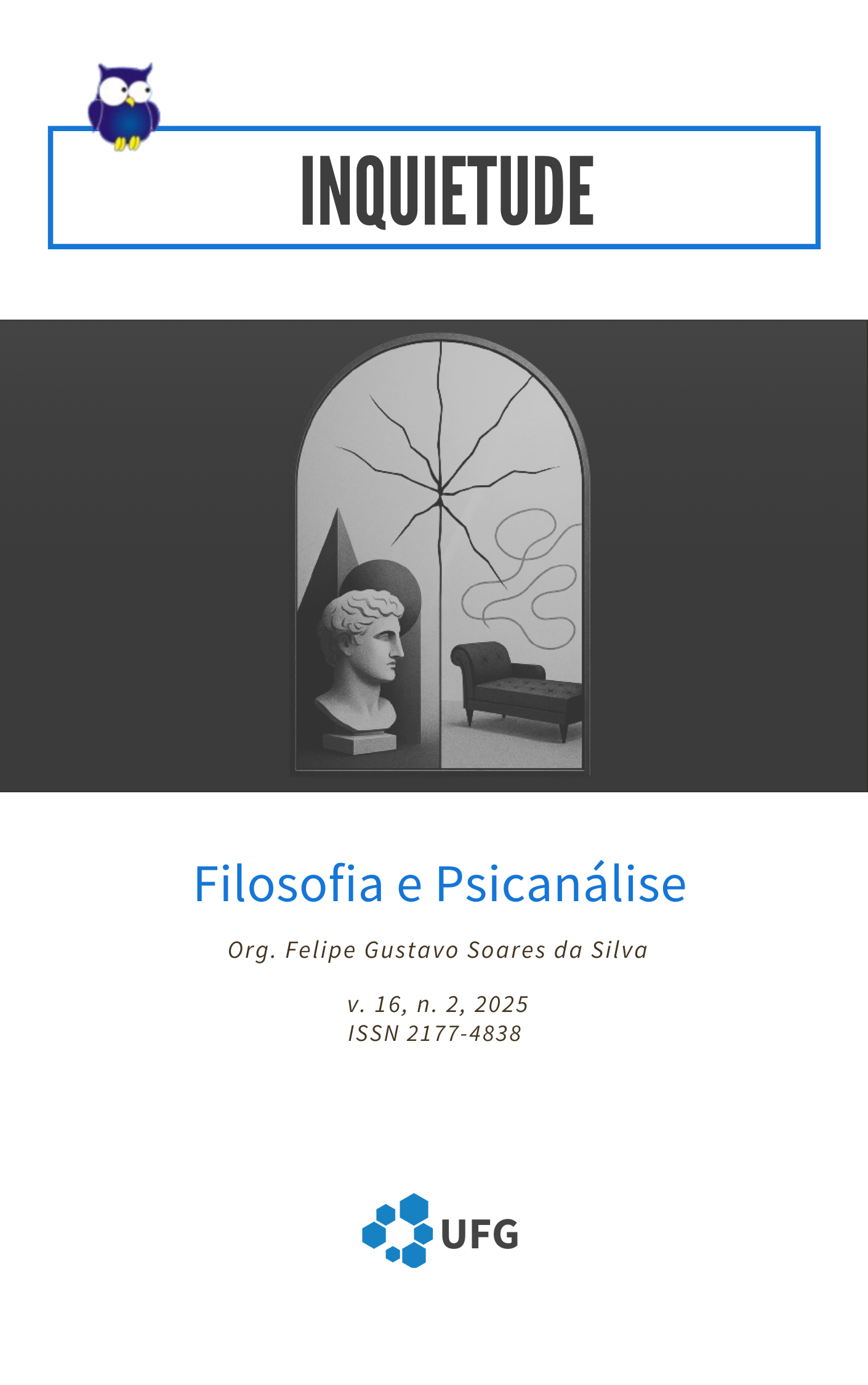
Despite being a modern aesthetic movement, the tragic has its roots in the 19th century Germany, propelled by writers of the German Romanticism. After a series of developments and elaborations, writers associated with the Sturm und Drang artistic and literary movement reworked Greek tragedy and provoked, according to Isaiah Berlin, an unprecedented revolution in Western thought. Nietzsche claims to be the first tragic philosopher and, with his philosophy, sets in motion a new way of thinking about man based on a critique of German idealism. A field marked by dialectics and contradiction, the tragic heralds modernity and precipitates a new conception of man, based on an irresolvable dissonance within. Freud makes this contradiction the basis of his theoretical field, stating “ego is not master of his own house” and founds psychoanalysis as a theorized clinical praxis. The objective of this work is to investigate the possible links and similarities between both authors and their contributions to the modern thought. Based on an analysis of two main texts – The birth of tragedy by Nietzsche and Das Unheimliche by Freud – it was possible to determine relevant similarities between the aesthetic category of the uncanny as proposed by the Freudian text, and the philosophy of the tragic, in which Nietzsche postulates to be the antithesis of aesthetic Socratism. The uncanny, as a mark of tragedy, encompasses the dimension of the unconscious and subverts the classical aesthetics of ancient Greece.
Downloads
References
ALMEIDA, Jefferson Pereira de. Friedrich Nietzsche: a justificação estética da existência e a reatualização do ethos da modernidade. 2009. 105 f. Dissertação (Mestrado em Educação) – Pontifícia Universidade Católica do Rio Grande do Sul, Porto Alegre, 2009.
BERLIN, Isaiah. As raízes do romantismo. Trad. Isa Mara Lando. São Paulo: Fósforo, 2013.
DALLA VECCHIA, Ricardo Bazilio. Filosofia da tragédia – tragédia da filosofia. In: ALMEIDA, Fábio Ferreira de; DAMIÃO, Carla Milani (org.). Estética em preto e branco. Goiânia: Ricochete, 2018, p. 130-55.
DE PAULA, Wander Andrade. O trágico no jovem Nietzsche: da estética da tragédia à autossupressão do esclarecimento filosófico. Síntese, Belo Horizonte, v. 47, n. 148, p. 331-52, 2020. https://doi.org/10.20911/21769389v47n148p331/2020.
FREUD, Sigmund. O estranho [1919]. In: FREUD, Sigmund. Uma neurose infantil e outros trabalhos (1917-1918). Rio de Janeiro: Imago, 1996. (Edição standard das obras psicológicas completas de Sigmund Freud, vol. 17)
MACHADO, Roberto. O nascimento do trágico: de Schiller a Nietzsche. Rio de Janeiro: Zahar, 2006.
MONTENEGRO, Maria Aparecida de Paiva el al. A estética como disciplina filosófica. Encontros universitários da UFC, Fortaleza, v. 3, n. 1, p. 5047, 2018.
NIETZSCHE, Friedrich. A gaia ciência. Trad. Paulo César de Souza. São Paulo: Companhia das Letras, 2001a.
NIETZSCHE, Friedrich. Ecce homo: como alguém se torna o que é. Trad. Paulo César de Souza. São Paulo: Companhia das Letras, 2001b.
NIETZSCHE, Friedrich. O nascimento da tragédia. Trad. Paulo César de Souza. São Paulo: Companhia das Letras, 2022.
RANCIÈRE, Jacques. O inconsciente estético. Trad. Mônica Costa Netto. São Paulo: Ed. 34, 2009.
SILVA, Micael Rosa. Do oriente vem o berro do bode: a proveniência “bárbara” e o estrangeirismo da mística dionisíaca. Trilhas filosóficas, Caicó, v. 14, n. 1, p. 177-93, 2021.
SUASSUNA, Ariano. Iniciação à estética. 16 ª ed. Rio de Janeiro: Nova Fronteira, 2018.
SZONDI, Peter. Ensaio sobre o trágico. Trad. Pedro Süssekind. Rio de Janeiro: Zahar, 2004.
Downloads
Published
How to Cite
Issue
Section
License
Copyright (c) 2025 Bruno Werneck

This work is licensed under a Creative Commons Attribution-NonCommercial-NoDerivatives 4.0 International License.