

Vol. 4 No. 1 (2013)
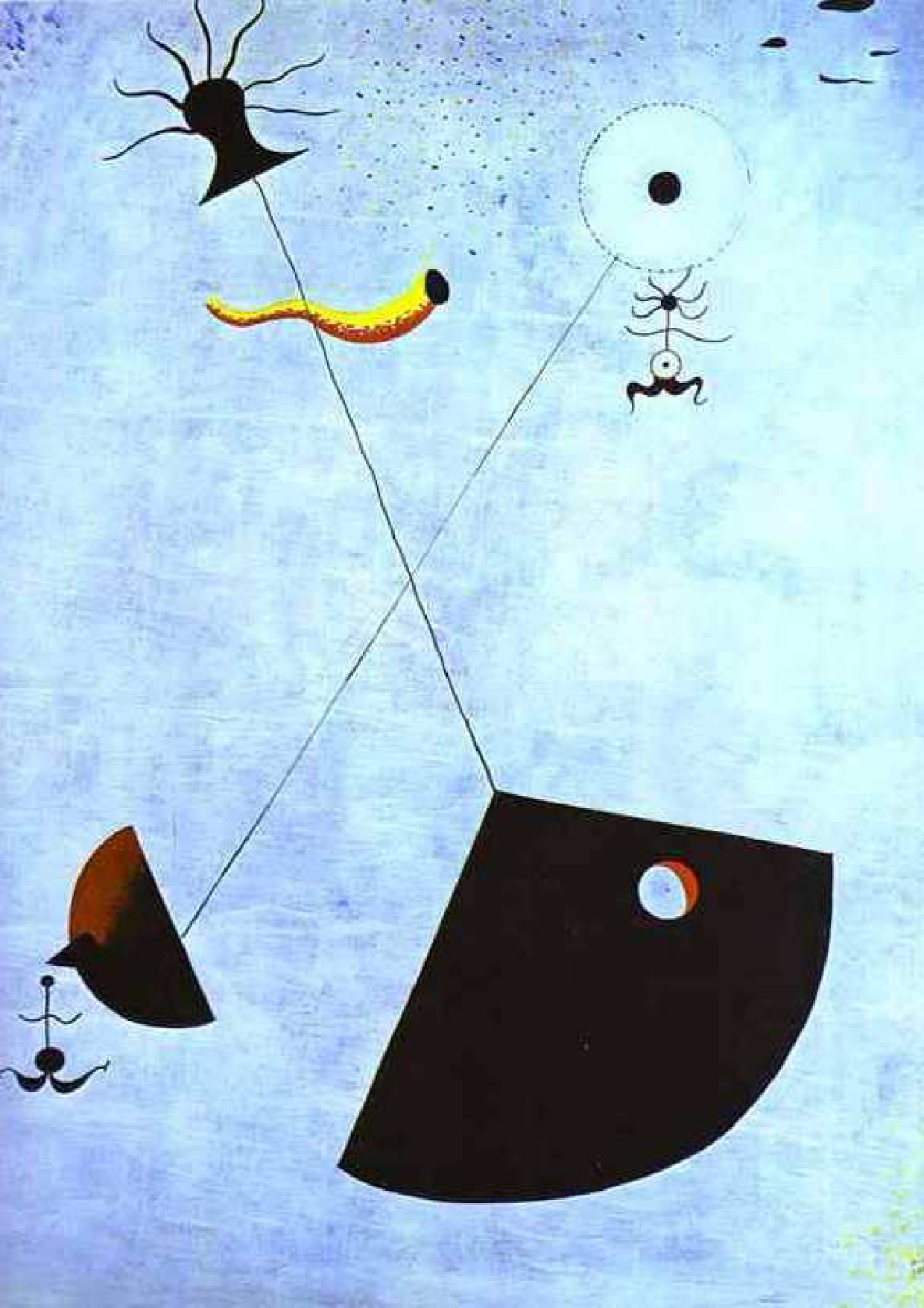
With joy and enthusiasm we give birth to the seventh edition of Inquietude. The painting by the Catalan surrealist (Miró), on the cover, illustrates motherhood. In this edition, the maternal figure we honor is our dearest Júlia Sebba Ramalho Morais, executive editor of the journal and lecturer in the Philosophy course of the campus in Goiás City (UFG). In a climate of fecundity and birth, Inquietude celebrates the opening of its fourth year of activity. The fecundity is shown in the restlessness of the students, researchers, professors and collaborators in general, who contributed and contribute to the journal to consolidate itself as a valuable and qualified means of communication of emerging philosophical efforts on the national scene. This issue contains eight articles, a review and an unpublished translation of The 1643 correspondence between Descartes and Elisabeth. The last section is dedicated to the publication of the last part of A heroic history of modernity: Comments on Josef Früchtl’s The impertinent self, fruit of the work coordinated by professor Carla Milani Damião (UFG) together with students from the Kinosophia Study Group.
The articles that make up the first section cover the plurality of perspectives found in the various lines of philosophical research. On The way to universalization: The search for social peace in Eric Weil, the author [Daniel Artur Emidio Branco] presents us with the discussions of this French philosopher (of German origin) from the beginning of the 20th century, still not well known in Brazil, addressing fundamental issues for the debates in moral philosophy and political philosophy: the problem of evil, violence, society, law.
Now with regard to the article Happiness according to Sêneca [by Daniel Carvalho da Silva], we have the still present advices and moral teachings of the Stoic philosopher to reach the so desired happiness. In The lightnings of fatality: Reflections on Nietzsche's and Shakespeare's tragic [by Eduardo Carli de Moraes] we have an example of the always expected and rich relationship between philosophy and literature with the analysis of two notable authors for the understanding of the tragic dimension of human life. With Spirit and consciousness in Hegel's The phenomenology of spirit [by Leonardo Araújo Oliveira] the reader is led to the Hegelian universe of subjectivity. The conceptual plot of the text passes through the successive stages of consciousness and the constitution of the spirit towards the Absolute.
Amid the ethical dilemmas arising before the inevitable advancement of science and technology, the question of building a new ethics based on the concept of responsibility emerges. On the horizon of this conception, the present edition brings the article The convergence of parental and political responsibilities in Hans Jonas' ethical theory [by Mayra Rafaela Closs Bragotto Barros Peterlevitz], discussing the ethical value of responsibility in the face of parent-child relationships, and of the public man and their community. The link between private interest and violence is the central point of discussion in The homo oeconomicus and the state of exception. The author [Guilherme de Freitas Leal] draws an interesting parallel between the concept of Homo oeconomicus in Foucault and the idea of exception in Giorgio Agamben's philosophy.
When faced with Discipline, control and the new servitudes and subjections of capitalism [by Vladimir Moreira Lima Ribeiro] the relationship between capitalism and subjectivity in the present day is revealed. The consolidation of capitalism as a disciplinary society and its functioning through biopower is a theme worked with Michel Foucault as background. The mutation suffered by capitalism, which culminates in the consolidation of a control society, and its relationship with the processes of subjectivation, is discussed through the contributions of Gilles Deleuze. Still in the field of contemporary political philosophy, Thinking on hospitality: A reading from the philosophy of Jacques Derrida [by Pedro Fornaciari Grabois] presents a dialogue between Derrida and Emmanuel Levinas, where it reflects on the notions of and more, in connection with the philosophical question of otherness.
In this edition we also have a review of the book French philosophy, by François Cousset. The author [Vinicius Oliveira Sanfelice] initially narrates the unusual and ironic context in which the discussion on a homogeneous French philosophy arose. The result is an extensive and enriching contemporary philosophical debate in light of the concepts of deconstruction, use and context.
Still in the French setting, but under the philosophical atmosphere of the 17th century, the reader will have the opportunity to read first-hand the unpublished translation from English [by Marcelo Fischborn] part of the text of The correspondence between Descartes and Princess Elisabeth prepared by the respected interpreter Jonathan Bennett. The translation has significant didactic value for presenting the philosophical content of the correspondence.
Heading towards closure, we find the third part of the special publication coordinated by Professor Carla Milani Damião (UFG) together with students from the Kinosophia Study Group, entitled The hybrid Self, Nietzsche, Foucault, postmodernity and the science fiction film, that will deal with the rich and long relation existing, for example, between the concept of Übermensch in Nietzsche and the constitution of the hero in the genre of science fiction. This is the last part of the special series A heroic history of modernity: The impertinent self by Josef Früchtl concerning the course taught by Professor Josef Früchtl in August 2011 at the Faculty of Philosophy of the UFG [Federal University of Goiás]. The course, based on Früchtl's book The impertinent self: A heroic history of modernity, was translated and discussed by the Kinosophia Study Group.
The invitation to become restless by visiting the body of writings in the present edition cannot come without thanks to those that made this birth possible. Special thanks to Fábio Ferreira de Almeida (UFG) and Carmelita de Freitas Felício (UFG), who renew and bring breath to the journal. With the removal of Júlia Sebba Ramalho the place of executive editor was kindly occupied by Fabio Ferreira de Almeida, who did not measure efforts in carrying out the preparations. Carmelita de Freitas Felício has accompanied the incipient movements of the journal and continues to vitalize it with her contributions. When it comes to renewal, we welcome Felipe Assunção Martins and Ithana Grasciela Macêdo Barbosa, the newest members of the Editorial Staff. We take the opportunity to greet all those who contributed in some way, besides the members of the journal, such as Andréia Ferreira, Rayani Melo and Frederico Assunção Martins who helped in the manufacture of the bookmarkers that will circulate from our launch.
In the rhythm of celebration and birth, we conclude by congratulating the Philosophy course at the Federal University of Goiás on its 50th anniversary. In this fiftieth anniversary of FaFil [Faculty of Philosophy] there has been opened the first class of doctorate, attesting to the achievements and presenting the efforts of the academic community. May the cradle of Inquietude continue to generate light.
May the restless quiet down and the quiet become restless, for such - good reading!
The Editing
Published:
2013-07-12