

Vol. 13 No. 1 (2022): Dossier "Nietzsche and the Feminine"
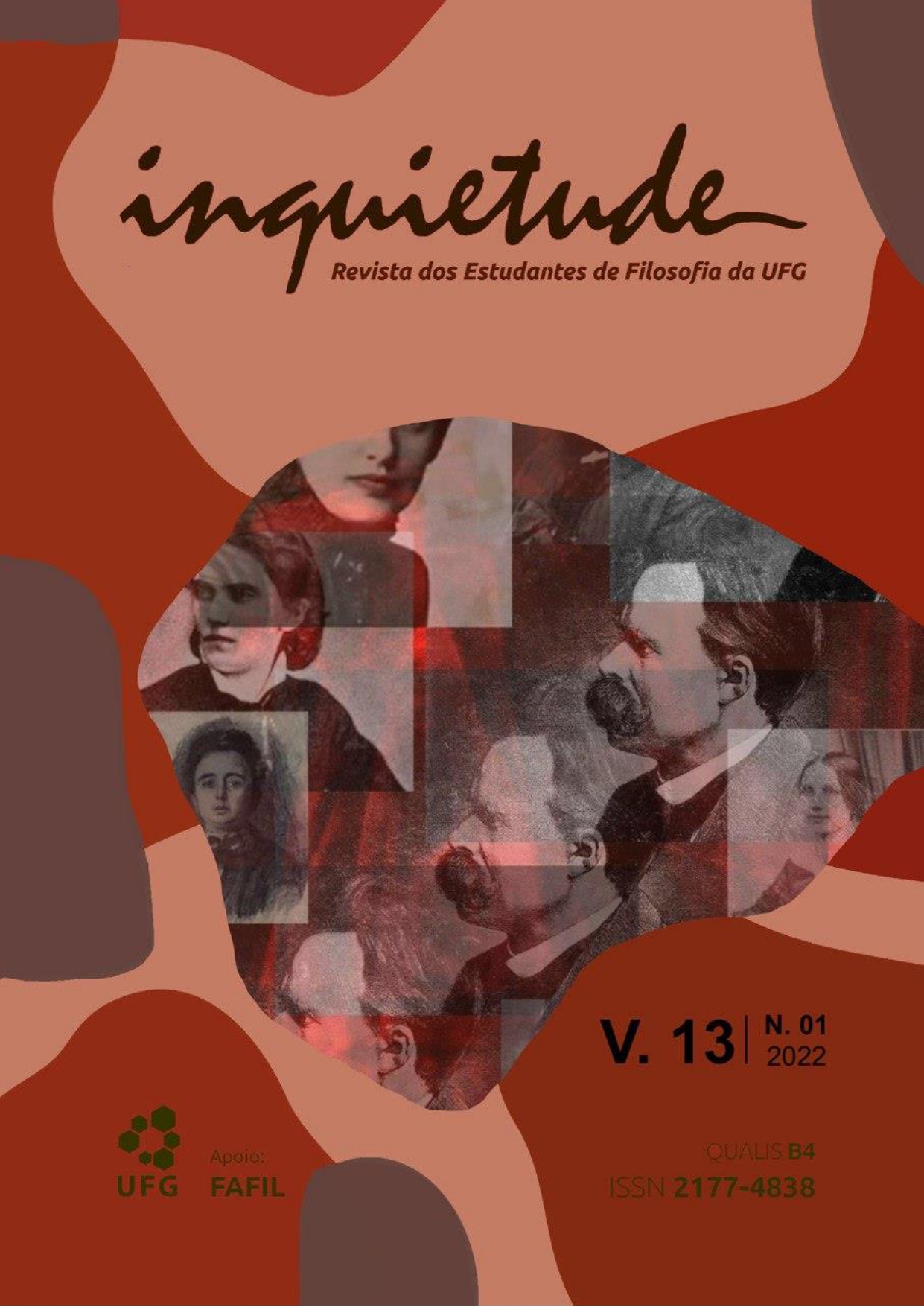
The Indian Gayatri Spivak, in 1985, in the book entitled Can the subordinate speak? denounces the compulsory silence in the lives of colonized people. At that time it was mainly about the sacrifices imposed on widows. However, silence is an overload placed on practically all undervalued bodies, as if what they had to say were not supposed to be said, because, after all, they would talk about aspects of their insignificance. According to such biased assessment, they should only listen and obey. Currently, at least in the Brazilian reality, we know the bad evaluation attributed to the voices of people subalternized from the term "mimimi" or "vitimism". So you try to ridicule what is said by women, black people, people with disabilities, children, older people etc. The repeated attempts to silence people who have been subalternized is a psychic and political functioning coming from the cowardly authoritarianism of those who call themselves superior. University education is not always different. Teachers speak, write and publish. Students listen and, at most, reproduce what they hear and read in the activities they need to carry out for the acquisition of grades and titles. Nevertheless, Inquietude was born as the voice of students from UFG’s Faculty of Philosophy who also wanted to publish what they were studying, instead of studying only for accountability. And this happened even before the publication requirement so that even students could start to score their résumés.
In this issue, Inquietude presents once again what undergraduate and graduate students have studied in subjects of the Philosophy course, in undergraduate and postgraduate studies, more specifically, in subjects taught by Professor Adriana Delbó about the insertion of what Nietzsche writes about women in the philosophical process for creation of ideals, truths and subalternities. Women as a gender inferior to the patriarchal tradition is here the main theme of the published articles.
The doctoral student Luciene Marques de Lima, from Nietzsche, writes about the problem around the possibilities of experiences necessary for women to "become what they are", in contrast to the normativity of gender denounced by Judith Butler. Lucas Romanowski, also a graduate student, presents how Nietzsche evaluates as a decrease of women the male requirement to build the woman itself, to meet its demand for scientificity. Patrícia Bagot de Almeida questions the relation (or the absence of relation?) between law, power and feminism, based on her master’s research, but also in her studies on Carol Smart, to say of a 'justice' limit with regard to women’s specific problems. Kamilly Barros de Abreu Silva moves between steps of "woman" to deal with necessary deconstructions and new perspectives for feminism, having as support Nietzsche, Butler and Derrida. Doctor Cristiane Marinho resumes her reading of Scarlett Marton's book, Nietzsche and women: Figures, images and female types, along with that which accompanies the research of Adriana Delbó, to present the diversity that it sees possible to investigate conservatism and contributions to female emancipation in Nietzsche’s work. In addition, the master in philosophy Igor Freitas Martins proposes a vigorous interpretation of aphorism 86 of Beyond good and evil in his article Women, idealism, and the mirror in Nietzsche.
Júlio César Freitas, a PIBIC [Institutional Program of Scientific Initiation Scholarships] scholar guided by professor Adriana Delbó, even before entering graduate school, already presents an article in which he systematizes his understanding that, in Nietzsche's case, it is not about an attack on women, but the analysis of the origin of gender inserted into the Nietzschean critique of metaphysics. Also as a result of the research in PIBIC, Juliana Mamede Melo, together with her advisor, develops an article in which they analyze aphorisms about the ideas of women in the work The gay science.
Finally, this issue of Inquietude is an invitation for you to follow the academic elaborations of students and researchers who have given themselves the power to think, speak, write and publish. May the reading of these articles contribute for the teaching and research in Philosophy to stop creating subordinations.
Adriana Delbó
Published:
2022-12-27